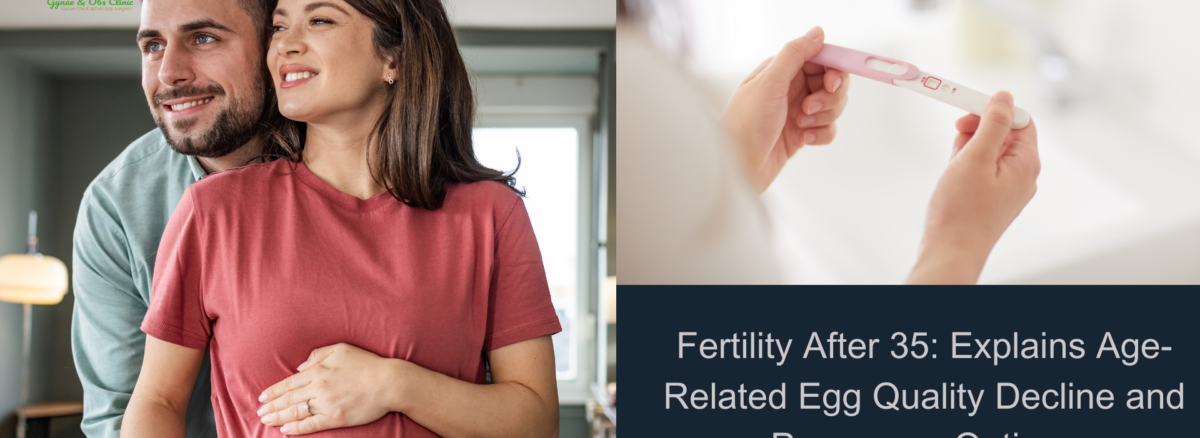
Fertility after 35 does decline, mainly because both egg count and egg quality reduce with age, but many women still conceive naturally or with medical support. Understanding these age-related changes early helps you choose the right time and the right treatment options if you need help conceiving.
How age affects your eggs
A woman is born with all the eggs she will ever have, and this number steadily falls from birth until menopause. After the mid-30s, the decline in egg number becomes faster, so fewer eggs are available for ovulation and fertility treatments.
With age, a higher proportion of eggs also become chromosomally abnormal (poor quality), which can lead to difficulty conceiving, higher miscarriage risk, or chromosomal conditions in the baby. This is why both fertility and pregnancy outcomes change noticeably after 35.
Natural fertility after 35
Fertility is highest in the 20s, slowly declines in the early 30s, and the drop becomes steeper after 35. By 40, the chance of natural pregnancy per cycle is much lower than in the early 30s, and it may take longer to conceive even if periods are regular.
The risk of miscarriage also rises with age because of egg quality changes, increasing from around 10% in the early 30s to over 20–30% in the early 40s. Still, many women 35–40 do conceive within 6–12 months of trying, especially with healthy lifestyle choices and proper timing of intercourse.
When to see a fertility specialist
Because time matters more after 35, experts recommend not waiting too long for an evaluation. If you are 35 or older and have been trying for 6 months without success, a fertility assessment is advised. If you are 40+ or have irregular cycles, endometriosis, previous pelvic infections or surgery, you may need to consult even sooner.
A basic workup usually includes hormone tests (AMH, FSH), ultrasound to check antral follicle count, semen analysis, and tests to see if the fallopian tubes are open. These results show whether age-related egg decline is the main issue or if other treatable factors are involved.
Pregnancy options after 35
Even with age-related decline, several options can help you get pregnant:
Timed intercourse and lifestyle optimisation: Tracking ovulation, maintaining a healthy weight, not smoking, limiting alcohol, and taking folic acid support natural conception.
Ovulation induction ± IUI: Tablets or injections can stimulate egg release; intrauterine insemination (IUI) may be used in selected cases such as mild male factor or unexplained infertility.
IVF (in vitro fertilisation): Often recommended when age-related decline is significant or other methods have failed; success rates are still good in the mid-30s but drop with each year after that.
For some women over 35, IVF with preimplantation genetic testing (PGT) is suggested to select embryos with a normal chromosome number, which can reduce miscarriage risk and improve the chance of a healthy pregnancy.
Donor eggs, donor embryos and egg freezing
If ovarian reserve is very low or egg quality is severely affected, donor eggs may offer the highest chance of pregnancy, because eggs from younger donors are usually healthier. Donor embryos are another option for couples comfortable with using embryos created by others.
Egg freezing (fertility preservation) works best before 35, but can still be considered in the mid-30s if ovarian reserve is reasonable and pregnancy needs to be delayed. Early counselling about egg freezing helps women make realistic choices before egg quality and quantity decline further.
Conclusion
Fertility after 35 does decline because the number of eggs and the proportion of healthy eggs both fall with age, increasing the time to conception and the risk of miscarriage. However, many women in their late 30s and even early 40s still achieve healthy pregnancies through timely evaluation, lifestyle optimisation, and the right fertility treatments, including IVF and, when needed, donor eggs or embryos. The key is not to wait: if pregnancy is a priority, talk to a gynecologist in delhi early, understand your ovarian reserve, and plan your options while time is still on your side.
FAQs on Fertility After 35
- Is it too late to get pregnant after 35?
No. Many women conceive after 35, both naturally and with treatments such as ovulation induction or IVF, although it may take longer and success rates are lower than at younger ages. - How fast does fertility drop after 35?
Fertility declines gradually in the early 30s, but the drop becomes faster after 35 and more pronounced after 38–40 due to fewer and poorer-quality eggs. - Can lifestyle improve egg quality after 35?
Lifestyle changes cannot reverse age, but maintaining a healthy weight, not smoking, limiting alcohol, eating a balanced diet, and managing stress can support overall fertility and pregnancy health. - When should I see a doctor if I am over 35 and trying to conceive?
If you are 35 or older and have tried for 6 months without success, or are 40+ and not pregnant after a few months, you should seek a fertility evaluation. - What if my egg quality is very poor?
If tests show severely reduced egg reserve or recurrent IVF failure due to egg quality, donor eggs or donor embryos can provide a higher chance of pregnancy and a healthy baby.
Leave feedback about this