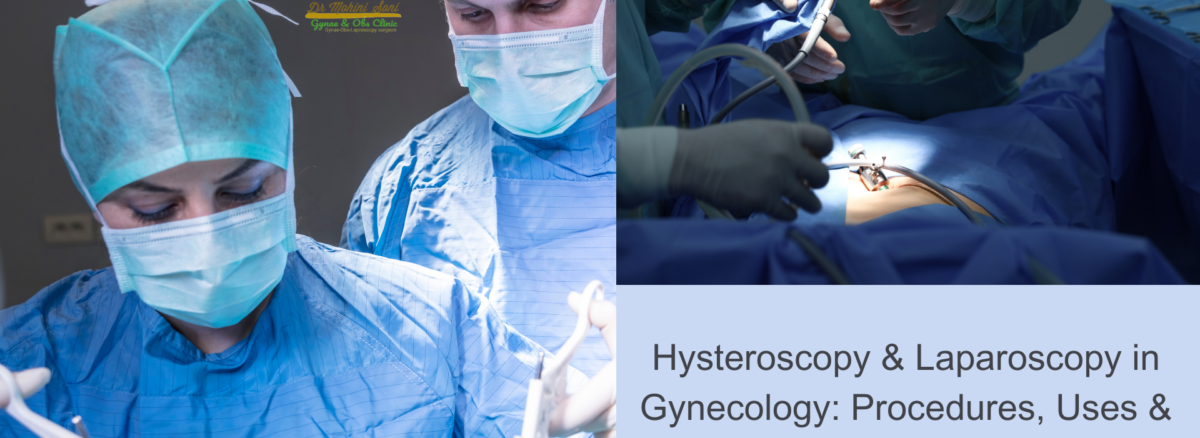
Advances in gynecology have made it easier and safer for women to get answers about their reproductive health. Today, many gynecological problems can be diagnosed and treated without major surgery. Hysteroscopy and laparoscopy are two such modern, minimally invasive procedures that help doctors identify issues early and treat them effectively — with less pain and faster recovery.
If you’ve been advised one of these procedures or are simply trying to understand them better, this guide explains everything in a clear and reassuring way.
What Is Hysteroscopy?
Hysteroscopy is a procedure that allows the doctor to look inside the uterus using a thin, lighted instrument called a hysteroscope. It is gently passed through the vagina and cervix, so there are no cuts or stitches on the abdomen.
This procedure helps doctors clearly see the uterine cavity and identify the cause of symptoms that may not show up clearly on scans.
When Is Hysteroscopy Recommended?
Your gynecologist may suggest hysteroscopy if you are experiencing:
- Heavy, prolonged, or irregular periods
- Repeated miscarriages
- Difficulty conceiving or failed implantation
- Uterine polyps or fibroids
- Abnormal ultrasound findings
- Suspected uterine adhesions or structural issues
Types of Hysteroscopy
- Diagnostic Hysteroscopy – Used to examine the uterus and find the cause of symptoms
- Operative Hysteroscopy – Used to treat problems like fibroids, polyps, or a uterine septum during the same procedure
What Is Laparoscopy?
Laparoscopy is a minimally invasive surgical technique that allows doctors to examine the uterus, ovaries, and fallopian tubes through small keyhole incisions in the abdomen. A tiny camera (laparoscope) provides a clear view of the pelvic organs on a screen.
Compared to traditional open surgery, laparoscopy causes less pain, minimal scarring, and quicker recovery.
When Is Laparoscopy Needed?
Laparoscopy may be advised for conditions such as:
- Ovarian cysts
- Fibroids
- Endometriosis
- Chronic pelvic pain
- Infertility evaluation
- Ectopic pregnancy
- Blocked fallopian tubes
- Gynecological surgeries like hysterectomy
How Are Hysteroscopy and Laparoscopy Used in Gynecology?
These procedures play an important role in diagnosing and treating many common women’s health concerns.
1. Infertility Evaluation and Treatment
They help identify uterine abnormalities, blocked tubes, endometriosis, or fibroids that may be affecting pregnancy.
2. Treatment of Fibroids and Polyps
Fibroids or polyps inside the uterus can often be removed through hysteroscopy, while larger fibroids may require laparoscopy.
3. Management of Endometriosis
Laparoscopy is the gold standard for diagnosing and treating endometriosis by removing abnormal tissue.
4. Abnormal Uterine Bleeding
Hysteroscopy helps pinpoint causes such as polyps, fibroids, or thickened uterine lining.
5. Recurrent Pregnancy Loss
Structural problems of the uterus can be diagnosed and corrected to improve future pregnancy outcomes.
Benefits of Hysteroscopy & Laparoscopy
Compared to traditional open surgery, these procedures offer many advantages:
- Minimally invasive approach
- Little to no visible scarring
- Less pain and blood loss
- Shorter hospital stay
- Faster recovery time
- Lower risk of infection
- Improved fertility outcomes
Most women are able to return to their daily routine within a few days.
Recovery After the Procedures
After Hysteroscopy:
- Mild cramping or light spotting for 1–2 days
- Usually a same-day procedure
- Normal activities can be resumed quickly
After Laparoscopy:
- Mild abdominal discomfort for a few days
- Hospital stay of 1–2 days
- Full recovery usually within 1–2 weeks
Your gynecologist will provide personalised after-care instructions to ensure smooth healing.
Are These Procedures Safe?
Yes. Hysteroscopy and laparoscopy are very safe when performed by experienced gynecologists. Complications are rare and usually minor, especially when done at the right time for the right indication.
When Should You See a Gynecologist?
You should consult a doctor if you experience:
- Heavy or irregular periods
- Persistent pelvic pain
- Difficulty getting pregnant
- Repeated miscarriages
- Known fibroids or ovarian cysts
- Abnormal ultrasound reports
Early evaluation often leads to simpler treatment and better results.
Conclusion
Hysteroscopy and laparoscopy have truly changed the way gynecological conditions are diagnosed and treated. These procedures not only reduce physical discomfort but also help women feel more confident and informed about their health.
If you’re facing gynecological concerns or fertility challenges, speaking to an experienced gynecologist can help you understand whether hysteroscopy or laparoscopy is the right step for you.
FAQs
1. Are hysteroscopy and laparoscopy painful?
They are minimally invasive procedures and usually cause only mild discomfort.
2. How long do these procedures take?
Hysteroscopy takes about 15–30 minutes, while laparoscopy may take 1–2 hours.
3. Can I get pregnant after these procedures?
Yes, treating underlying issues often improves fertility chances.
4. Do these procedures require hospital admission?
Hysteroscopy is usually day-care, while laparoscopy may need short hospital stay.
5. Is general anaesthesia required?
It depends on the procedure. Operative laparoscopy usually requires general anaesthesia.
Leave feedback about this