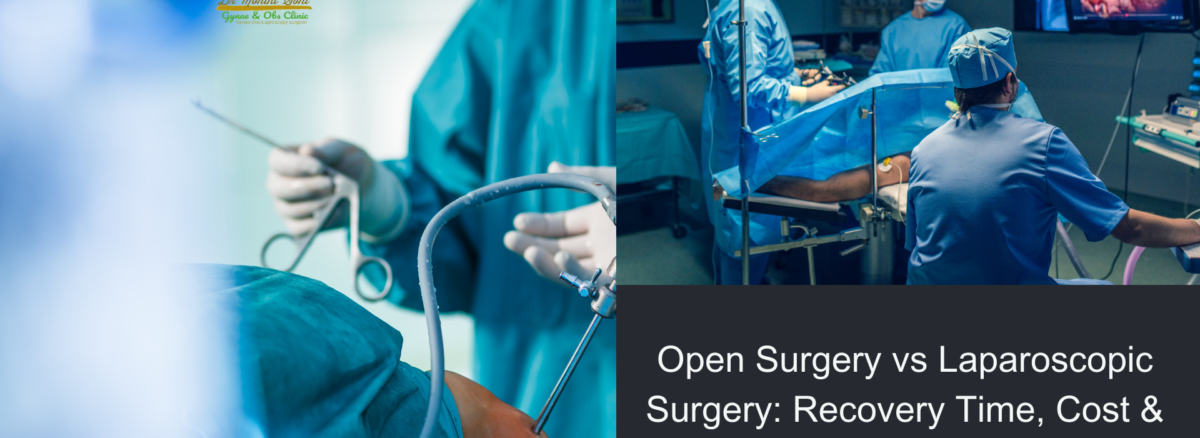
When facing treatment for fibroids, ovarian cysts, endometriosis, or hysterectomy, many women ask:
Should I choose open surgery or laparoscopic surgery?
Understanding the difference between open abdominal surgery and minimally invasive laparoscopic surgery helps you make an informed decision about your women’s health.
This guide explains recovery time, cost differences, benefits, and safety factors in simple terms.
What Is Open Surgery?
Open surgery (also called abdominal surgery) involves a larger incision in the abdomen to access the uterus or pelvic organs.
It is commonly recommended for:
- Very large fibroids
- Advanced endometriosis
- Cancer-related conditions
- Complex pelvic adhesions
While effective, it usually requires longer healing time.
What Is Laparoscopic Surgery?
Laparoscopic surgery is a minimally invasive procedure performed through small 0.5–1 cm incisions using a camera and specialized instruments.
It is widely used for:
- Fibroid removal (myomectomy)
- Ovarian cyst removal
- Endometriosis treatment
- Laparoscopic hysterectomy
Cost Comparison
Many patients believe laparoscopic surgery is very expensive. While the initial procedure cost may be slightly higher due to advanced equipment, overall expenses may balance out because:
- Shorter hospital stay
- Less medication required
- Faster return to work
- Fewer post-surgery complications
Open surgery may appear less costly initially but can involve longer hospitalisation and delayed recovery
Benefits of Open Surgery
- Better access in complicated cases
- Suitable for very large tumours or fibroids
- Preferred in certain cancer surgeries
Benefits of Laparoscopic Surgery
- Smaller scars
- Reduced blood loss
- Lower infection risk
- Faster recovery
- Better cosmetic results
- Less post-operative pain
- perienced gynaecologist will recommend the most suitable approach after proper evaluation.
Which Surgery Is Safer?
For most beginning gynaecological conditions like fibroids, cysts, and endometriosis, laparoscopic surgery is considered safer and more advanced.
However, safety depends on:
- Patient’s medical history
- Size and severity of condition
- Surgeon’s expertise
- Availability of advanced facilities
An experienced gynaecologist will recommend the most suitable approach after proper evaluation.
Who Should Consider Laparoscopic Surgery?
You may be a good candidate if:
- You want quicker recovery
- You prefer minimal scarring
- Your condition is not extremely complex
- You wish to resume routine activities sooner
Conclusion
When comparing open surgery vs laparoscopic surgery, minimally invasive procedures clearly offer advantages in recovery time, comfort, and cosmetic outcomes.
However, the right choice depends on your medical condition. A detailed consultation with a qualified gynaecologist ensures safe, personalised treatment and better long-term results.
FAQs
1. Is laparoscopic surgery always better than open surgery?
Not always. It is preferred for most benign conditions, but complex or cancer cases may require open surgery.
2. How long does laparoscopic surgery take?
It usually takes 1–3 hours depending on the complexity of the condition.
3. Will I need stitches after laparoscopic surgery?
Yes, but they are very small and often dissolve on their own.
4. Can I get pregnant after laparoscopic fibroid removal?
Yes, in many cases fertility improves after fibroid removal.
5. Is laparoscopic surgery safe for older women?
Yes, if the patient is medically fit. Age alone is not a limiting factor.